The Hidden Cost of Holiday Returns: Why Shoppers Need a Smarter Refund Strategy This Year
Holiday returns drain time and mental energy. Learn smarter strategies to track refunds, meet deadlines, and reclaim hours lost to return chaos.


Holiday shopping was in full swing this past season, with Black Friday and Christmas now in our rearview mirror. And, that doesn’t even include all that other stuff purchased around the holidays - new suitcases, fancy attire, dinner party decorations, cookware, even new houseware items to help make your guests who were visiting for the holidays as comfortable as possible. Tech journalist Jennifer Jolly highlighted how this shopping season shaped up in her Sunday Briefings, but what no one talks about is what happens after the gift wrap comes off: the returns. Between November and January, millions of shoppers will navigate a maze of return deadlines, refund timelines, and policies that vary wildly from retailer to retailer. It's the invisible second act of holiday shopping, and it comes with costs that go far beyond shipping fees.
The returns themselves aren't the biggest problem. What drains your time and energy is everything that comes after: tracking which refunds have been posted, remembering which retailer has which deadline, wondering if that $200 purchase ever made it back to your account. This is the hidden cost of holiday returns, and it's time we talked about smarter strategies.
The Invisible Labor of Holiday Returns

When we talk about the "mental load," we're referring to the cognitive work of remembering, planning, and coordinating tasks that often go unnoticed. Holiday returns are a perfect example. It's not just about boxing up an item and dropping it at the post office. Although let's be honest, that is a pain in and of itself. But that's just step 1. It's about keeping track of what needs to be returned where and by when, remembering which purchases were gifts versus personal orders, saving and finding your receipts, coordinating shipping logistics, and monitoring your accounts to ensure refunds actually arrive. Whew! That was a lot.
For budget-conscious shoppers, the stakes feel higher. Missing a return deadline or losing track of a refund can mean money you were counting on simply disappears. It's also about the opportunity cost: every hour spent managing returns is an hour not spent on literally anything else.
Either way, the mental bandwidth required adds up quickly during an already overwhelming season.
The Real Costs No One Talks About
The Time Tax
Let's be honest about what returns actually require. For online returns, you need to log into your account, initiate the return, print a shipping label (or drive somewhere to get it printed), carefully repack the item, and drop it off at the designated carrier. For in-store returns, you're looking at driving to the store, finding parking, waiting in line during the busiest retail season of the year, and driving back.
Each return easily consumes 30 to 45 minutes. If you're juggling returns from five different retailers—which is entirely normal during the holidays—that's several hours of your life. It's time you'll never get back during an already packed season.
Mental Load and Tracking Chaos
The cognitive burden is where things get truly exhausting. You ordered from Nordstrom, Lululemon, Amazon, Ikea, and Target over the course of November and December. Each retailer has different return windows. Some offer extended holiday returns through mid-January; others stick to their standard 30-day policy. One requires you to initiate the return online before shipping. Another needs the original packaging. Without a system, something expensive will slip through the cracks.
The mental work of keeping all these details straight—while also managing work deadlines, holiday gatherings, and family obligations—creates a constant low-grade stress that many people don't even recognize until it boils over.

Money Anxiety Meets Financial Opacity
Not knowing when refunds will arrive creates genuine anxiety for a number of shoppers. You returned that $247 Anthropologie dress two weeks ago. Is the refund pending? Has it posted? Did the retailer actually receive the package? You're checking your bank app multiple times a day, trying to reconcile what you think you're owed with what's actually appeared in your account.
For some people, the issue may also feel frustrating because of the lack of visibility. When you're managing household finances across multiple credit cards and accounts, tracking which purchases were returned and which refunds are outstanding becomes an administrative headache. It's not just anxiety about money—it's annoyance at the inefficiency of manually tracking what should be an automated process.
Decision Fatigue
Here's a scenario that plays out thousands of times during the holidays: You received a gift that's not quite right, or you ordered something that doesn't fit as expected. The item cost $85. Returning it requires driving 25 minutes each way to the store or paying for shipping. You calculate the hassle factor against the refund amount. Is it worth your time? The cognitive energy spent weighing these micro-decisions multiplied across multiple potential returns becomes exhausting.
This decision fatigue hits busy people particularly hard. You already spend your days making high-stakes decisions. The last thing you want is to burn mental bandwidth calculating whether a return is worth the drive.
The Opportunity Cost
Every hour spent managing returns is an hour not spent doing something that actually matters to you. It might mean working on a project that could advance your career or a personal home project. For parents, it's time away from your kids. For everyone, it's the simple pleasure of rest during the most exhausting time of year or in January when things are back in full swing.
This opportunity cost is rarely calculated but deeply felt. The returns themselves are necessary. The administrative burden of tracking them shouldn't be.
The Return Deadline Trap
January is when extended holiday return windows collide with daily life resuming at full speed. You're back to work after the holidays, catching up on everything that accumulated during your time off, and suddenly you realize you have a stack of items that need to be returned, each with a different deadline rapidly approaching.
Here's how it typically unfolds: You ordered from Amazon, Aritzia, Lululemon, and The RealReal during November and December. January arrives. Work picks up. Life gets busy. Suddenly you're staring at a mid-January deadline for purchases you forgot about until it's almost too late. That $340 Aritzia coat you meant to return? The window closed while you were busy with daily life. Now you're stuck with a purchase you never intended to keep.
The stress or irritation of realizing you've missed a deadline and lost money on an item you never planned to keep is entirely preventable—but only if you have a system in place.
Building a Smarter Holiday Return Strategy

The solution isn't to stop shopping or stop making returns. The solution is to approach returns strategically, removing as much mental load and wasted time as possible.
Create a Returns Calendar
As soon as a package arrives, note the return deadline in your calendar, not just the date, but a reminder a week before. This single habit eliminates most missed deadlines. Use your phone's calendar app, a shared family calendar, or even a physical planner. The specific tool doesn't matter. What matters is capturing the deadline the moment you open the package.
Centralize Your Receipts
Keep all holiday purchase confirmations in one place, either a physical folder or a dedicated email folder. When it's time to make a return, you're not searching through weeks of emails or digging through drawers. Everything is in one spot. Consider even having a dedicated email account that you use for shopping.
Check Return Policies Before You Buy
This is especially critical for gifts. Before purchasing, spend 30 seconds confirming the return window and any restrictions. Is it a final sale item? Does it require original packaging? Knowing this upfront prevents unpleasant surprises later. And remember to get a gift receipt if the purchase is a gift. It's like giving two gifts in one!
Don't Wait Until After Christmas
If you ordered something for yourself in November and it's not right, return it before the post-holiday rush. The vast majority of returns occur in January, creating a surge that can lead to longer processing times and increased chances of errors or delays. Processing returns in early to mid-December means smoother transactions and less hassle for everyone involved. Something to keep in mind for the next holiday season.
Automate What You Can
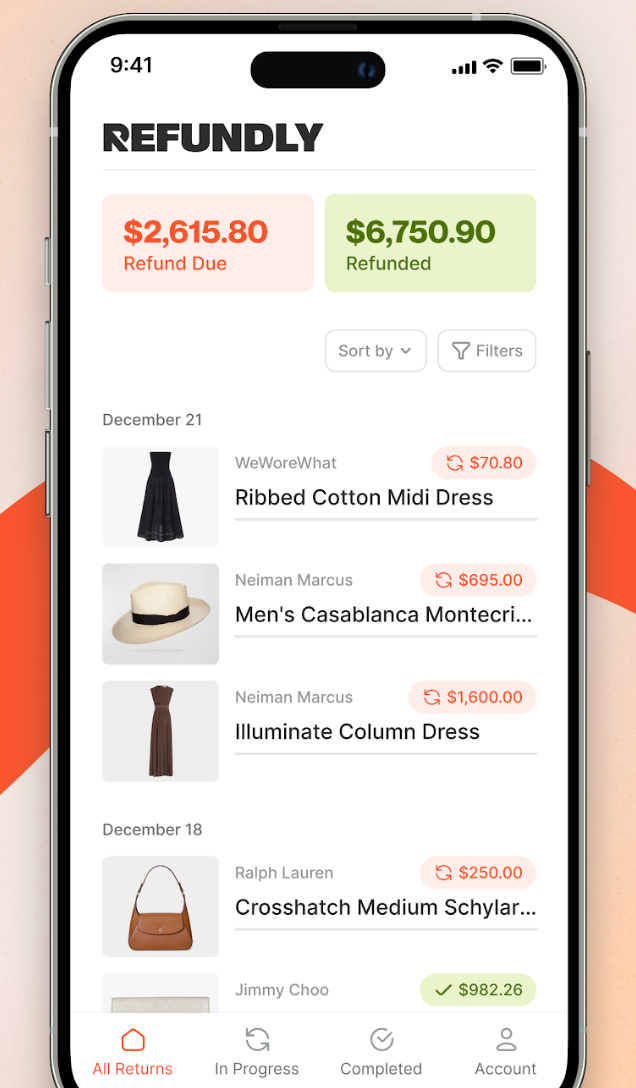
Look for tools and systems that remove manual work from the process. Some credit cards offer purchase tracking features. Calendar apps can set recurring reminders. And Refundly, an app that automatically monitors the status of your shopping returns and refunds, helps ensure you're not constantly checking whether your money has arrived in your account. It's super quick to set up. Plus, Refundly is free on the App Store!
The goal isn't to add more tasks to your to-do list. It's to set up systems once that save you time and mental energy throughout the season.
Post-Holiday Action Plan
Before Anything Else: Download Refundly to get your return tracking organized.
Early January: Review everything you received as a gift or purchased in November and December that might need to be returned. Check deadlines immediately. Prioritize returns by deadline and amount (handle the expensive items with tight windows first).
By mid-January: Process any remaining returns before extended holiday windows close. Many retailers' extended policies end mid-January, so don't wait until the last minute.
By end of January: Follow up on any refunds that haven't posted yet. If you returned something two weeks ago and haven't seen the refund, contact the retailer to confirm receipt and processing timeline.
Throughout January: Resist the temptation to let returns slide. A $50 return feels less urgent than daily work deadlines, but it's $50 you've already earned. Treat it like money that belongs to you because it does.
Take Back Your Time This Holiday Season
Returns are part of smart holiday shopping. Whether you're taking advantage of deals, shopping for important holiday events and special people in your life, or buying necessities for the winter, returning items is normal and managing that process shouldn't consume your limited time and energy.
The real cost of holiday returns isn't just the shipping fee. It's the hours spent tracking, the mental bandwidth wasted wondering, and the money lost when deadlines slip by unnoticed. You can't eliminate returns, but you can eliminate most of the invisible work that comes with them.
Whether you're managing returns from three stores or thirteen, whether those purchases total $500 or $5,000, having a system matters. Tools like Refundly help lighten the load by automatically tracking your returns and refunds, so you can spend less time on administrative tasks and more time on what actually matters.
Keep reading

Bath & Body Works Return Guide: What You Can’t Return to Bath & Body Works in 2026
Learn what Bath & Body Works won't accept for returns in 2026, including significantly used items, plus how long refunds take and what to do without a receipt.

Why Celebrity Stylists Order 3x More Than They Keep (And How They Stay Organized)
Celebrity stylists over-order to perfect every look, then return what is not used. See how they manage high-volume returns and how Refundly keeps every refund tracked and organized.